




In traditional logistics, large-scale retail moves and prepares everything on pallets. At Bennati the flow is different: incoming pallets have to be broken down and shipments built as sets of master cartons, boxes holding the individual products for one customer. A standard WMS, designed around the pallet, does not fit this model.
A tailor-made WMS for piece picking and master carton packing How we redesigned the logistics of a company that receives pallets and ships boxes
Logikamente therefore developed WMS software tailored to the food and gift box sector. The system follows the whole product cycle, from goods receipt to shipping, and exchanges data both ways with SAP.
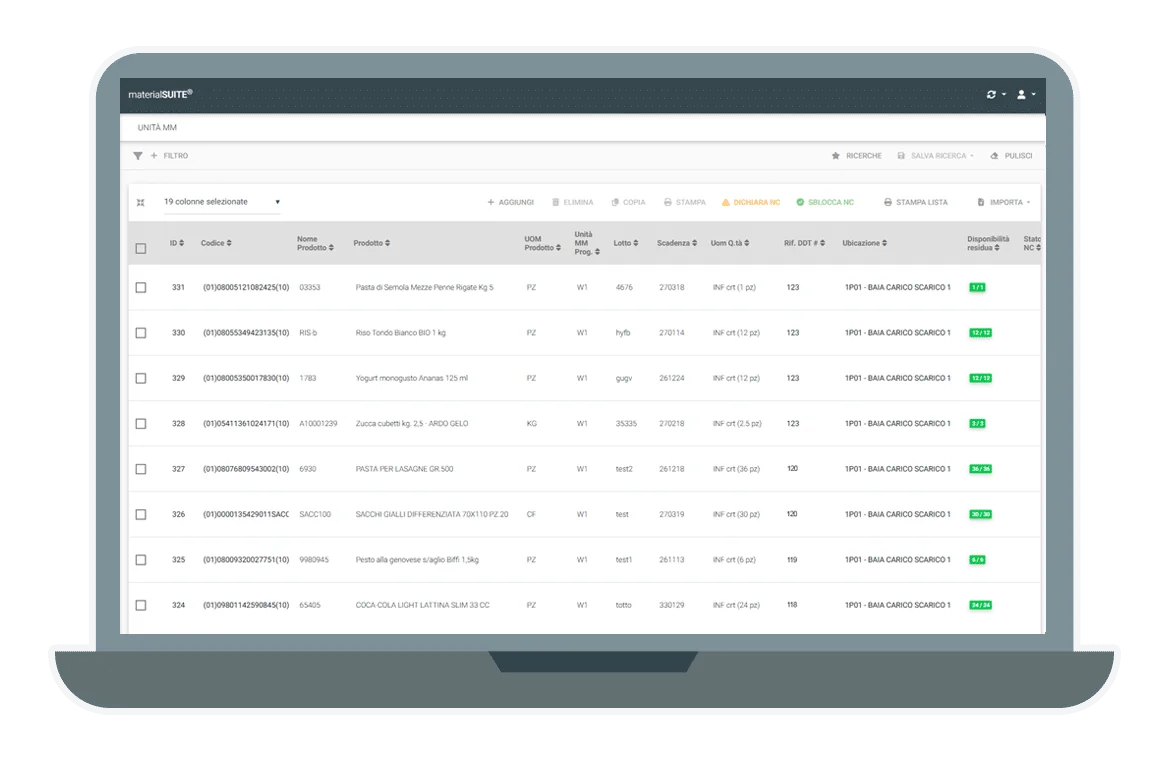
From purchase order to put-away. Purchase orders imported from SAP create the goods receipt notice on the handhelds. Suppliers deliver pallets with their own labels and with GS1 labelling that is not always consistent. When a label is non-standard or unreadable, the operator uses the Abaco function to enter product code, batch and expiry date manually on the handheld, without holding up the receipt. Goods receipt creates the warehouse units (UDM) as full pallets in the loading bay. With dedicated put-away missions, the operator moves them to storage or picking locations, scanning unit and location.
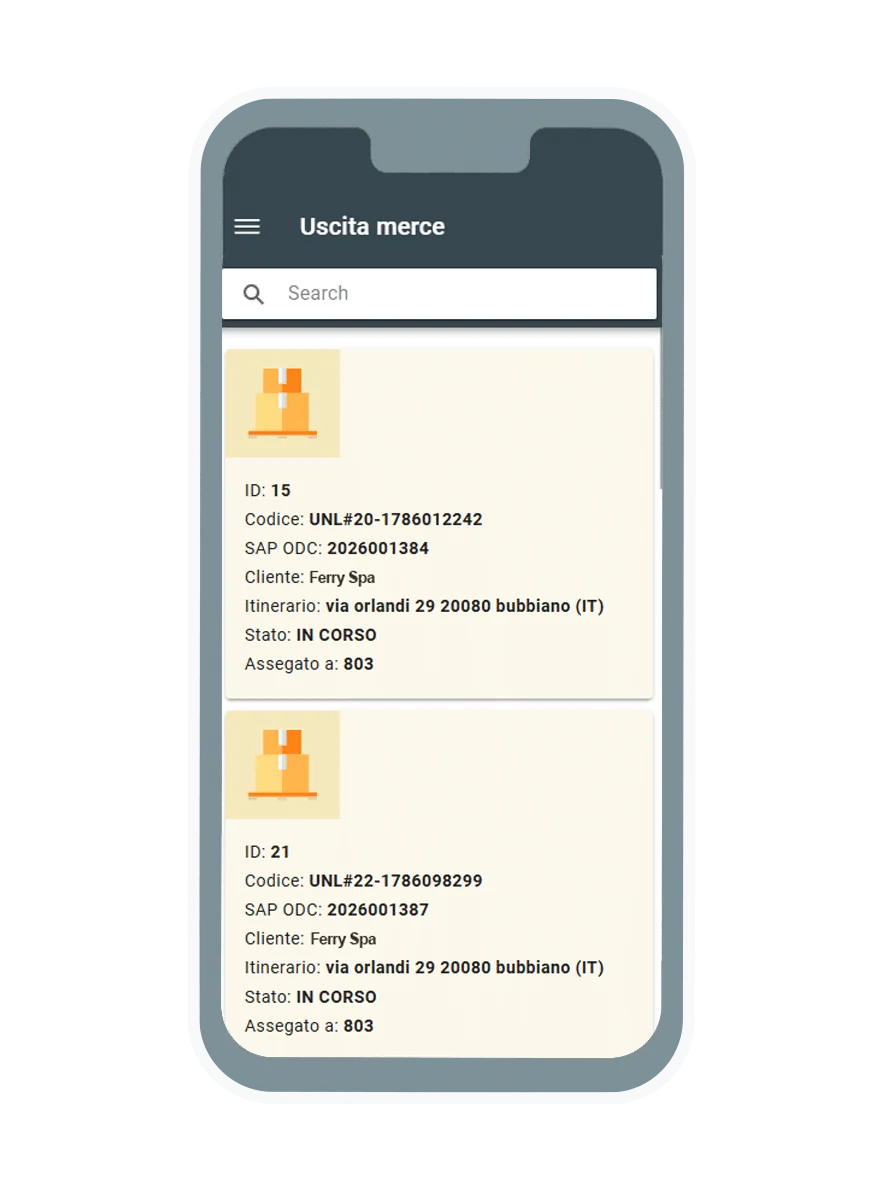
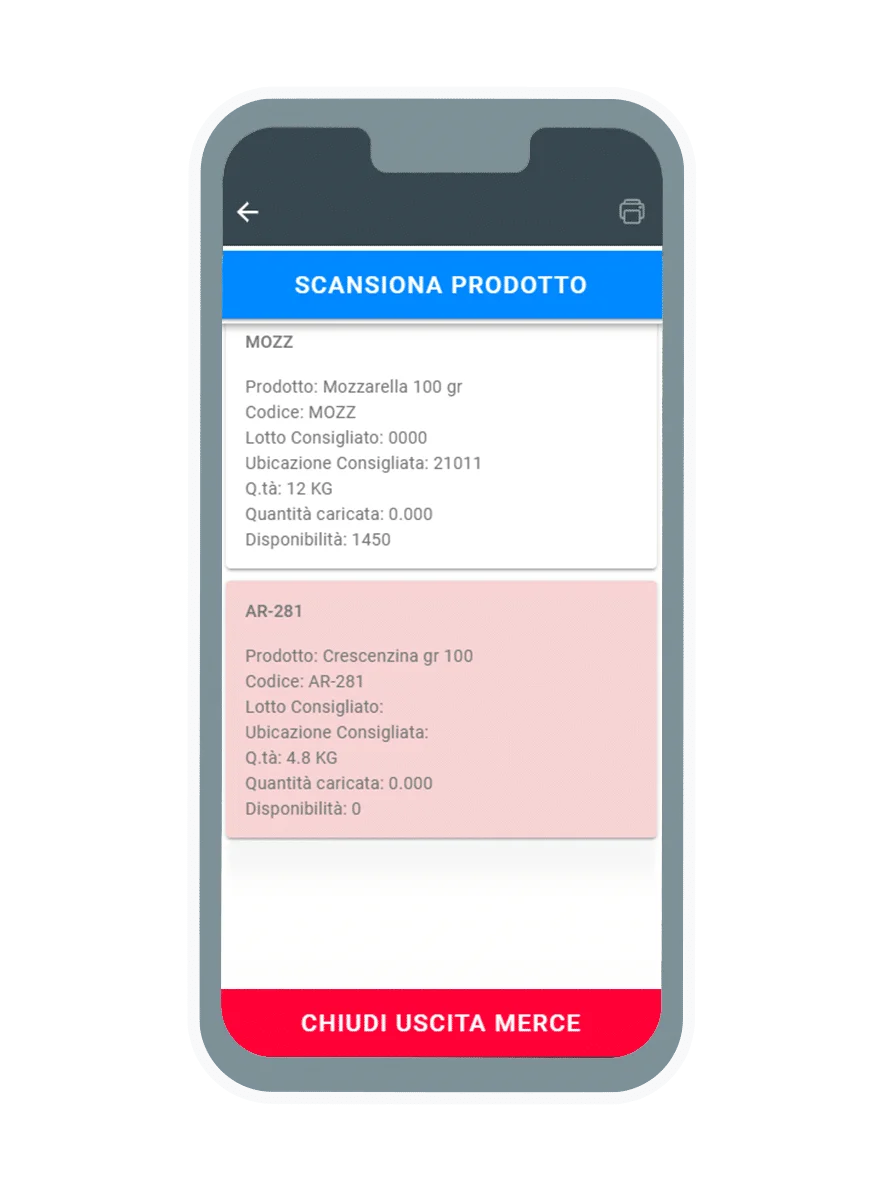
FEFO picking. For each sales order, the operator sees on the handheld the lines to pick, sorted by FEFO (First Expired, First Out) logic, with suggested location and batch. Products closest to expiry ship first, which is essential for a gourmet food range.
Master cartons built by the operator. The operator decides on the spot how many master cartons to open and how to arrange the products, based on the volume of the boxes. They print progressive labels and apply them as they go, and every product placed in the carton is scanned with the gun. When the master carton is closed with the on-screen padlock, the WMS generates and prints the packing list, the exact contents of that single carton, to be applied on the outside.
Shortages, backorders and partial shipments. If the requested quantity exceeds availability, the WMS highlights the line in red. The operator can force the goods issue to close by sending a partial order; the WMS tells SAP what was actually shipped, SAP processes the backorder and sends the WMS back the order with only the lines still to be fulfilled.
Non-conformities under control. Damaged products or products close to expiry are moved to a virtual "Non-conforming" location that mirrors the physical structure of the warehouse. The operator can declare a non-conformity directly from the scanner during the warehouse round or from the web interface. With the "Unlock NC" function, batches can be made temporarily available for picking for special sales, for example to schools or local businesses interested in products nearing their expiry date.
SAP integration. The WMS tracks every movement (receipt, issue, internal transfer) and manages its synchronisation status with SAP: Exportable, Sent, OK or Error. The system also manages product groups, including specific temperature-controlled storage conditions, and EAN codes.


